
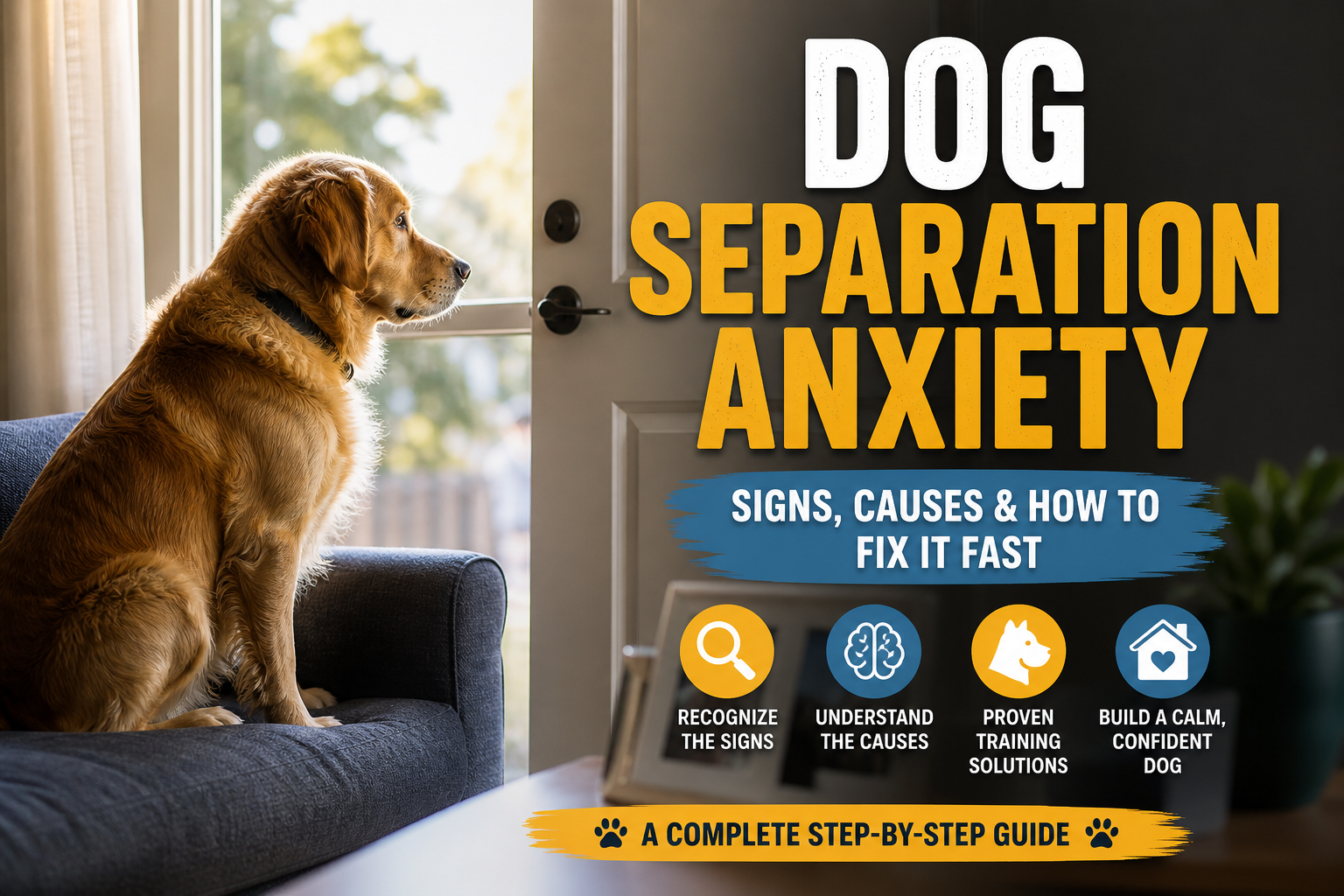


Dog separation anxiety is more than just an annoying habit—it’s a serious behavioral issue that can affect your dog’s mental health and your household’s peace. If your dog barks nonstop, destroys furniture, scratches doors, or panics the moment you leave, you’re not dealing with disobedience. You’re dealing with emotional distress.
Many dog owners misunderstand this behavior and try to correct it with punishment or frustration. Unfortunately, that approach almost always makes things worse. The key to solving separation anxiety is understanding why it happens and applying consistent, proven training methods that build your dog’s confidence over time.
Dogs are naturally social animals. In the wild, they live in packs and rarely spend time alone. When your dog becomes overly dependent on your presence, even short absences can feel threatening. The good news is that with the right strategy, patience, and consistency, you can teach your dog to feel safe and calm—even when you’re not home.
🔍 Signs Your Dog Has Separation Anxiety


Not all barking or destructive behavior is caused by separation anxiety, so it’s important to recognize the difference. Dogs with true separation anxiety show consistent patterns tied specifically to your absence.
One of the most obvious signs is excessive vocalization. Your dog may bark, howl, or whine continuously after you leave. This isn’t just a few barks—it can go on for hours, often reported by neighbors or captured on pet cameras.
Destructive behavior is another major indicator. Dogs with anxiety tend to focus on exit points such as doors, windows, or walls. Chewing furniture or tearing cushions is not random—it’s often an attempt to cope with stress or “escape” to find you.
You might also notice pacing, restlessness, or repetitive movements before and after you leave. Some dogs drool excessively, pant heavily, or even have accidents indoors despite being house-trained.
Perhaps the most telling sign is pre-departure anxiety. If your dog becomes nervous when you pick up your keys, put on shoes, or grab your bag, it means they’ve already associated those cues with being left alone.
⚠️ What Causes Separation Anxiety in Dogs?


Separation anxiety doesn’t appear overnight. It’s usually triggered by specific experiences or changes in your dog’s environment.
Rescue dogs are particularly prone to anxiety, especially if they’ve experienced abandonment or inconsistent care in the past. These dogs often develop strong attachments quickly and fear losing their new home.
Major life changes can also trigger anxiety. Moving to a new house, changes in family members, or even a shift in your daily routine can disrupt your dog’s sense of stability. For example, many dogs developed separation anxiety after owners returned to work following long periods at home.
Over-attachment is another common cause. If your dog follows you everywhere, seeks constant attention, and struggles to relax alone—even when you’re home—it may indicate dependency that can lead to anxiety when separated.
Lack of early independence training in puppies can also contribute. Dogs that were never taught how to be alone gradually may struggle more later in life.
⚡ Step-by-Step Training Plan to Fix Separation Anxiety


Fixing separation anxiety isn’t about quick fixes—it’s about building long-term confidence. The process requires patience, but it works when done correctly.
Start with desensitization to departure cues. Dogs quickly associate actions like grabbing keys or putting on shoes with your departure. To break this connection, perform these actions randomly throughout the day without leaving. This reduces your dog’s anxiety triggers.
Next, introduce gradual departures. Begin by leaving your dog alone for just a few minutes. Return before they become anxious, and slowly increase the duration over days or weeks. This teaches your dog that being alone is temporary and safe.
Creating a safe space is essential. Whether it’s a crate or a specific room, this area should feel secure and positive. Add comfortable bedding, familiar scents, and favorite toys. Never use this space as punishment.
Mental stimulation plays a huge role in reducing anxiety. Puzzle toys, treat dispensers, and long-lasting chews can keep your dog occupied while you’re away. This shifts their focus from your absence to a rewarding activity.
Exercise is equally important. A well-exercised dog is calmer and less likely to experience anxiety. Daily walks, play sessions, and enrichment activities help release excess energy and reduce stress.
🧠 Advanced Training Techniques That Work Faster


Once you’ve started basic training, you can accelerate progress with more advanced techniques.
Teaching independence inside the home is one of the most effective methods. Encourage your dog to spend time in a different room while you’re still present. This helps them learn that they don’t need constant proximity to feel secure.
The “place” command is another powerful tool. Train your dog to relax on a specific bed or mat for extended periods. This builds calmness and self-control.
You can also use background noise, such as calming music or white noise, to reduce environmental triggers that may cause barking.
Some owners find success with scent-based comfort, such as leaving behind an item of clothing with their scent. This can provide reassurance during your absence.
🚫 Common Mistakes That Make Separation Anxiety Worse


One of the biggest mistakes dog owners make is punishing their dog for anxiety-related behavior. From your dog’s perspective, the destruction or barking happens while you’re gone, so punishment afterward only creates confusion and fear.
Overly emotional departures and greetings can also reinforce anxiety. If you make a big fuss when leaving or returning, you’re signaling that your absence is a significant event—something your dog should react to.
Another common mistake is moving too quickly in training. If you increase alone time too fast, your dog may relapse and lose progress. Slow, steady improvement is the key.
Inconsistency is equally harmful. Everyone in the household needs to follow the same rules and training approach to avoid confusing your dog.
🏡 Creating a Calm Environment at Home


Your home environment plays a huge role in your dog’s emotional stability. A calm, structured environment can significantly reduce anxiety.
Stick to a consistent daily routine for feeding, walks, and playtime. Dogs thrive on predictability, and a stable routine helps them feel secure.
Limit exposure to overstimulating triggers such as constant noise or chaotic environments. Creating a peaceful space where your dog can relax undisturbed is essential.
You can also incorporate calming aids such as anxiety wraps or pheromone diffusers, which are designed to promote relaxation.
⏳ How Long Does It Take to Fix Separation Anxiety?
Every dog is different, so there’s no exact timeline. Mild cases may improve within a few weeks, while more severe anxiety can take several months of consistent training.
The key is patience. Progress may feel slow at times, but consistency will lead to lasting results. Rushing the process often leads to setbacks.
👩⚕️ When to Seek Professional Help
If your dog’s anxiety is extreme—such as injuring themselves, nonstop howling, or severe destruction—it’s important to seek help from a professional trainer or veterinarian.
In some cases, behavioral therapy combined with medication may be necessary to support your dog during the training process.
🐾 Final Thoughts
Separation anxiety can feel overwhelming, but it’s one of the most treatable behavioral issues when approached correctly. By focusing on gradual training, building independence, and creating a calm environment, you can help your dog feel safe and confident—even when you’re not home.
The goal isn’t just to stop the barking or destruction—it’s to improve your dog’s overall well-being. A calm, confident dog leads to a happier home for both of you.
🎯 Dog Training Tools
Train your dog faster with smart tools designed for better obedience and control.
- ✔ Improve commands & discipline
- ✔ Reduce jumping & pulling
- ✔ Easy home training
🔇 Behavior Control
Stop excessive barking, aggression, and unwanted habits safely.
- ✔ Anti-bark solutions
- ✔ Gentle & humane correction
- ✔ Stress-free behavior control
🐾 Calm & Anxiety Support
Help your dog stay calm during stress, travel, or loud environments.
- ✔ Reduce anxiety & stress
- ✔ Great for loud noises
- ✔ Keeps dogs relaxed