
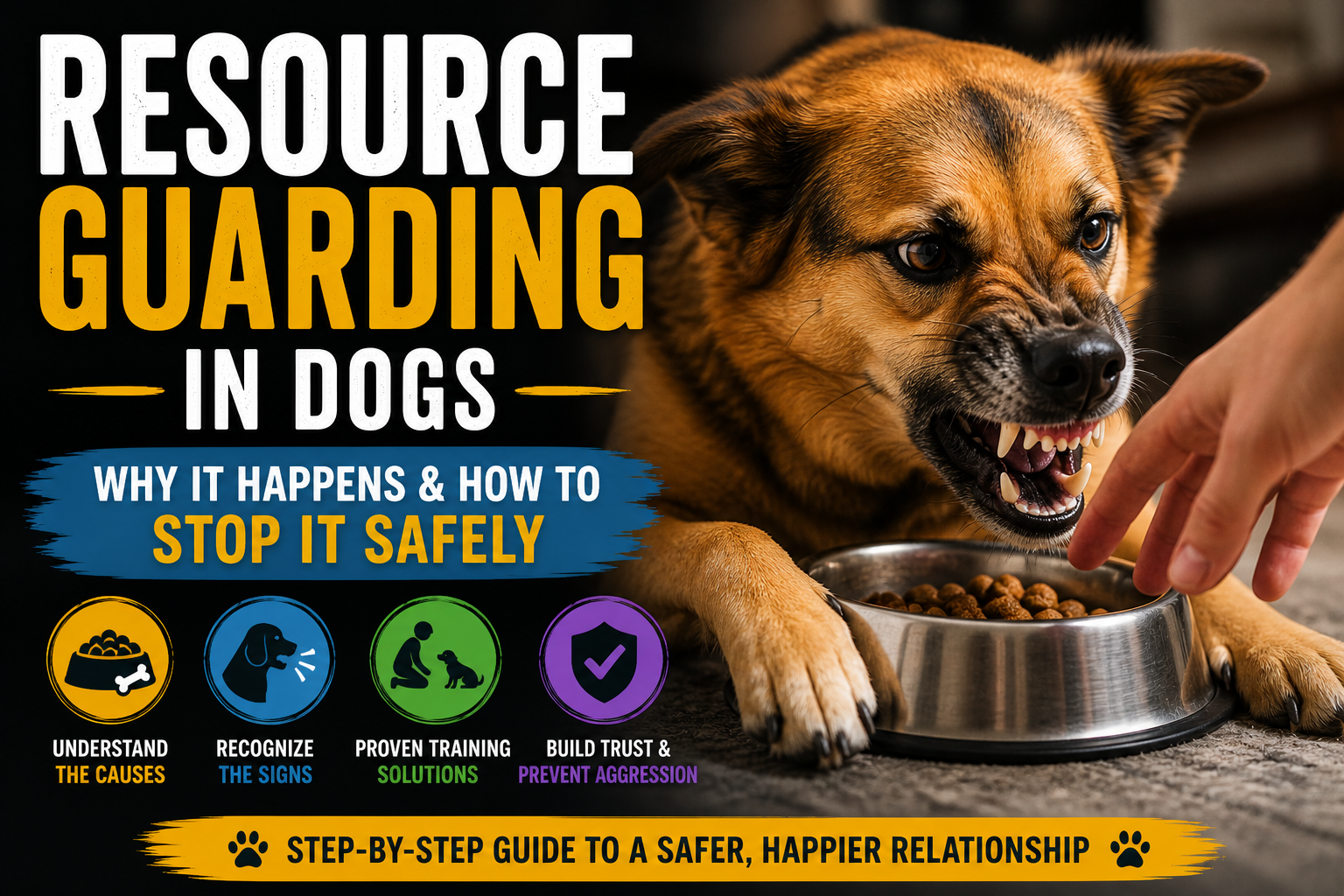


Resource guarding in dogs is one of the most misunderstood dog behaviors—and one of the most dangerous if handled incorrectly. If your dog growls, snaps, or stiffens when someone approaches their food, toys, or even their favorite spot, you’re not dealing with a “bad dog.” You’re dealing with a natural survival instinct that needs proper training.
Dogs guard resources because, in their minds, those items are valuable and could be taken away. This behavior is rooted in instinct, not dominance. The key is to change your dog’s emotional response from fear and protection to trust and calmness.
Left unaddressed, resource guarding can escalate. What starts as a growl can turn into snapping or biting. That’s why early intervention is critical—not just for your safety, but for your dog’s long-term behavior.
🔍 Signs of Resource Guarding You Shouldn’t Ignore


Resource guarding doesn’t always start with aggression. In fact, the early signs are often subtle—and easy to miss if you don’t know what to look for.
Your dog may freeze when you approach their food bowl. You might notice a stiff body, lowered head, or intense focus on the item they’re guarding. Some dogs show the “whale eye,” where you can see the whites of their eyes as they watch you closely.
As the behavior escalates, dogs may growl, curl their lips, or snap. These are warning signals—not acts of disobedience. Punishing these signals is a mistake because it teaches your dog to skip the warning and go straight to biting.
⚠️ What Causes Resource Guarding?


Resource guarding is often linked to insecurity. Dogs that feel uncertain about access to food or valued items are more likely to protect them.
Rescue dogs are especially prone to this behavior, particularly if they’ve experienced scarcity in the past. Even puppies can develop guarding tendencies if they’ve had to compete with littermates for food.
In multi-dog households, competition can also trigger guarding. If one dog feels another might take their resource, they may become defensive.
Genetics can play a role too. Some breeds naturally have stronger guarding instincts, especially working or guarding breeds.
⚡ Step-by-Step Training to Stop Resource Guarding


The goal of training isn’t to force your dog to “give up” their resource—it’s to teach them that your presence means something better.
Start with desensitization. Approach your dog while they’re eating, but keep a safe distance. Toss a high-value treat (like chicken) near them, then walk away. Repeat this consistently. Your dog will begin to associate your approach with positive outcomes.
Next, teach the “trade” command. Offer something better than what your dog currently has. For example, if they’re holding a toy, present a high-value treat in exchange. This builds trust and reduces the need to guard.
Avoid taking items forcefully. This reinforces your dog’s fear and makes guarding worse.
Practice hand feeding during training sessions. This strengthens the bond between you and your dog and reduces anxiety around food.
Over time, gradually decrease distance and increase interaction—but only as your dog becomes more comfortable.
🚫 What NOT to Do (Critical Mistakes)


If you take one thing from this article, let it be this: never punish a dog for resource guarding.
Punishment doesn’t solve the problem—it suppresses warning signals. This makes your dog more unpredictable and increases the risk of biting.
Avoid outdated “dominance” techniques like alpha rolls or forcing your dog away from their food. These methods damage trust and often escalate aggression.
Don’t test your dog repeatedly by provoking them. Training should be controlled and gradual—not confrontational.
🧠 Advanced Techniques for Faster Results


Once your dog shows improvement, you can introduce advanced training methods.
The “leave it” command is extremely powerful. It teaches your dog to disengage from an item voluntarily, which reduces guarding behavior.
Impulse control exercises, such as waiting before eating, also help build patience and trust.
You can also practice controlled exposure—having your dog eat while you move around calmly at a safe distance.
👨👩👧👦 Resource Guarding Around Children (Important)


If you have children, resource guarding becomes a safety priority.
Teach kids never to approach a dog while it’s eating or holding a toy. Always supervise interactions and create clear boundaries.
Even a well-trained dog can react if they feel threatened, so prevention is key.
⏳ How Long Does Training Take?
Some dogs improve within weeks, while others take months. The timeline depends on the severity of the behavior and your consistency.
The key is steady progress—not perfection.
👩⚕️ When to Seek Professional Help
If your dog has already bitten or shows intense aggression, consult a professional dog trainer or behaviorist immediately. This isn’t something to handle casually.
🐾 Final Thoughts
Resource guarding may look scary, but it’s highly treatable with the right approach. By building trust, using positive reinforcement, and avoiding punishment, you can transform your dog’s behavior safely.
The goal isn’t just to stop guarding—it’s to help your dog feel secure enough that they no longer need to.
🎯 Dog Training Tools
Train your dog faster with smart tools designed for better obedience and control.
- ✔ Improve commands & discipline
- ✔ Reduce jumping & pulling
- ✔ Easy home training
🔇 Behavior Control
Stop excessive barking, aggression, and unwanted habits safely.
- ✔ Anti-bark solutions
- ✔ Gentle & humane correction
- ✔ Stress-free behavior control
🐾 Calm & Anxiety Support
Help your dog stay calm during stress, travel, or loud environments.
- ✔ Reduce anxiety & stress
- ✔ Great for loud noises
- ✔ Keeps dogs relaxed